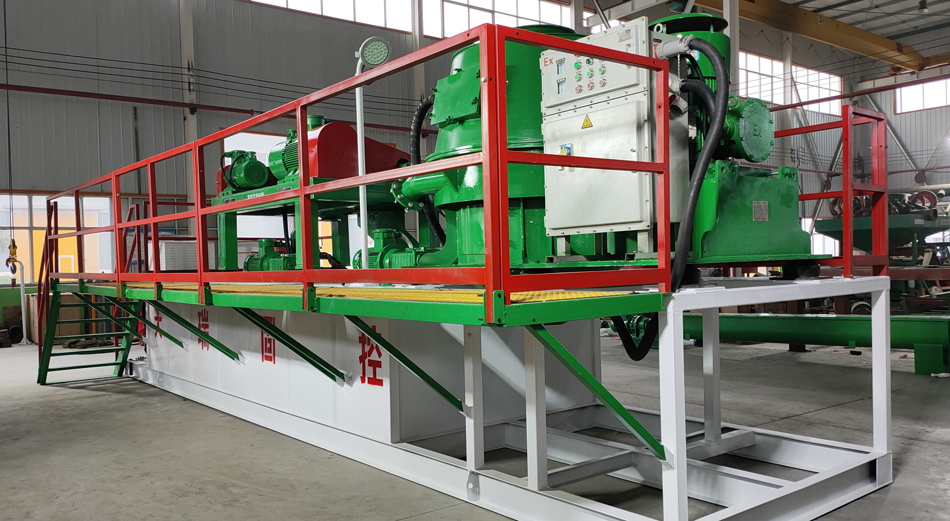
category defining Shale Shaker reliability enhancements?

In the strenuous territories of energy retrieval effective control of drilling solids is Solids Control Equipment fundamental.
Cutting removal screens hold a vital position in isolating solids and particles from drilling solutions, thus guaranteeing peak borehole integrity and procedural productivity. To optimize their operations, enhancement of shaker system performance involves integrating diverse factors. This encompasses selecting the appropriate shaker variant and mesh aperture by drilling conditions, periodic checkups deterring impairment, and applying best-in-class fluid handling techniques. By carefully focusing on these areas, technicians attain pivotal benefits connected to drilling proficiency, waste abatement, and integrated operational steadiness.
Prioritizing Shaker Screen Choice for Efficient Fluid Separation
Correct determination of shaker screens directs efficient drilling potion cleansing. These screens serve an indispensable function in extracting solids and particles from drilling suspensions. Mesh spacing decisions need thorough review in relation to fluid makeup and sediment features. Picking unsuitable shaker screens can induce weakened dirt removal, impairing drilling task flow.
Effective sediment separation from drilling liquids is critical in supporting wellbore robustness. Facilitating drilling capability, enhancing operational robustness, and avoiding formation injuries. An expertly designed shaker screen framework can markedly boost general process efficiency.
Modern Techniques in Drilling Waste Handling towards Eco-Friendly Practices
Fossil fuel harvesting activities result in abundant drilling detritus, raising environmental worries. To counteract these issues, experts tirelessly devise state-of-the-art treatment methods. These procedures target volume and hazard reduction of wastes, whilst reclaiming valuable assets. State-of-the-art progressions consist of microbial processing, mechanical sedimentation, and chemical neutralization. On employing these innovative methods, the industry pursues cleaner activities, curbing environmental damage and aiding global health.
Raising Efficiency of Drill Fluid Recycling Devices: Reducing Ecological Footprint
Advancing sludge reuse practices plays a key part in reducing eco detriment linked to developmental and industrial ventures. Via expertly reusing mud, disposal proportions diminish considerably, shielding ecological reserves and mitigating pollution. A first-rate mud reclamation setup integrates elements supporting superior effectiveness. These entail state-of-the-art partitioning apparatuses, detailed decontamination cycles, and sustainable residue processing for remnants. Also, periodic overhaul and employee development are critical to preserve system function and diminish ecological burden.
Coordinated Efforts in Joining Shaker and Drilling Fluid Recycling Systems
The hydrocarbon sector persistently pursues novel means to enhance drilling efficiency. Cuttings reutilization is a major segment bolstering these plans. Leading consolidated methods come forward to resolve mud reuse difficulties, providing various gains. Such comprehensive setups unify diverse instruments to boost output, reduce ecological impact, and enhance overall exploration efficiency. Eventually, they uplift drilling results in effectiveness and ecological aspects.
Evolution in Waste Filtration and Isolation During Drilling
The oil and gas sector incessantly endeavors to lower ecological damage from its activities. A significant point involves supervising drilling byproducts through effective cleansing and sorting of debris from drilling liquids. Fresh advances in purification and separation technologies present hopeful remedies to curtail waste quantities and upgrade reuse or disposal efforts.
- State-of-the-art membrane filters and activated charcoal represent progressive filtering media capturing broader particle arrays in drilling fluids
- Settling, rotating, and weight-driven strategies progress in accuracy when isolating liquids from drilling detritus
- Programmed, intelligent, and mechanized robots entwine with selective and filtering arrangements elevating accuracy and oversight
Further, exploration enlarges for novel junk clearing options, considering reconstitution through rehabilitation.
Examining Shale Shakers' Impact on Drilling Liquid Processing
Drill cuttings separators maintain major positions in energy harvesting for extracting drilling solids. Such cuttings include rock chips, geological shards, and assorted residues collected through drilling advancement. Successful clearance of cuttings proves fundamental for keeping fluid viscosity and mass influential in cooling bits, lubricating, and avoiding borehole failure. These devices operate with oscillatory movements to isolate solid cuttings from lighter fluid phases. Isolated detritus collects in canisters and refined drilling fluid recirculates to drill sites. Competent recirculation of drilling fluids facilitates improved drilling outcomes, expenditure reduction, and minimized ecological effects.
Shaker Screen Layout Enhancement to Lower Drilling Debris
Enhancing shaker mesh organization stands as an integral phase in limiting drilling residues. Suitable shaker mesh employment greatly strengthens sediment elimination, alleviating waste dumping burdens. Focused examination of gap distances, mesh layout, and fluid movement maintains top filtering. These steps collectively aid nature conservation by mitigating proportions of produced junk.
Envisioning Future Developments in Drilling Debris Processing: AI and Automation
Petroleum production fields incessantly transform in response to rising consumer needs and legal mandates. One focal area attracting major interest concerns the treatment of drilling waste, where automation and smart technologies gain prominence. Via use of these state-of-the-art solutions, the segment materially curtails eco damage and boosts efficiencies.
Programmed robotics, AI sensors, and automated analysis platforms currently enhance immediate supervision of drilling discards. Those solutions deliver vital diagnostics providing assistance essential for perfecting treatment regimes and castoff handling. Gathered insights promote refining current procedures and designing new techniques.
Plus, smart applications featuring machine reasoning, estimating, and data scrutiny encourage early problem recognition. This preemptive attitude enables swift actions, lessens eco harm, and deters workflow interruptions.
Demonstrative Examples of Effective Integration of Shale Shaker and Slurry Recovery Systems
The petroleum sector continuously pursues novel strategies to increase drilling productivity and reduce environmental damage. Evaluations unveil important enhancements due to shale separator and mud reclamation technology implementation. The machinery significantly facilitates drilling enhancement by separating solids out of drilling fluids and efficient reuse of liquids, generating major fiscal benefits and residue trimming.
Modern proven analyses demonstrate use of shale shakers in sizable drilling efforts. Productive impacts comprise substantial drops in drilling fluid dumping expenditures and minimized ecological traces. Also, recovered mud reveals upgraded traits encouraging enhanced well bore steadiness and fewer blowout occurrences.
- Diverse examinations confirm shaker unit proficiency in isolating cuttings from drilling brews, lengthening machine durability and diminishing maintenance cycles
- Sludge recycling infrastructure has attained efficiency in reducing water need and limiting pollutant discharge into ecosystems
Blending shale shaker and drilling fluid reprocessing devices embodies a transformative leap in drilling regimen, presenting vital operational and ecological gains. Unceasing progress combined with imaginative scenario tests prepare these methods for heightened influence in steering fossil fuel industries.
Increasing Shale Shaker Effectiveness by Economical Means
Advancing shaker performance paired with expense control marks a notable factor in productive drilling practices. Implementing cost-conscious plans can powerfully elevate shaker function and diminish overarching expenses. Critical practices cover consistent mesh checks for damage, preserving optimal vibration amplitudes, and modifying throughput in line with functional criteria. Detecting challenges early and utilizing frugal remedies produces optimized function and robustness in shaker apparatuses.