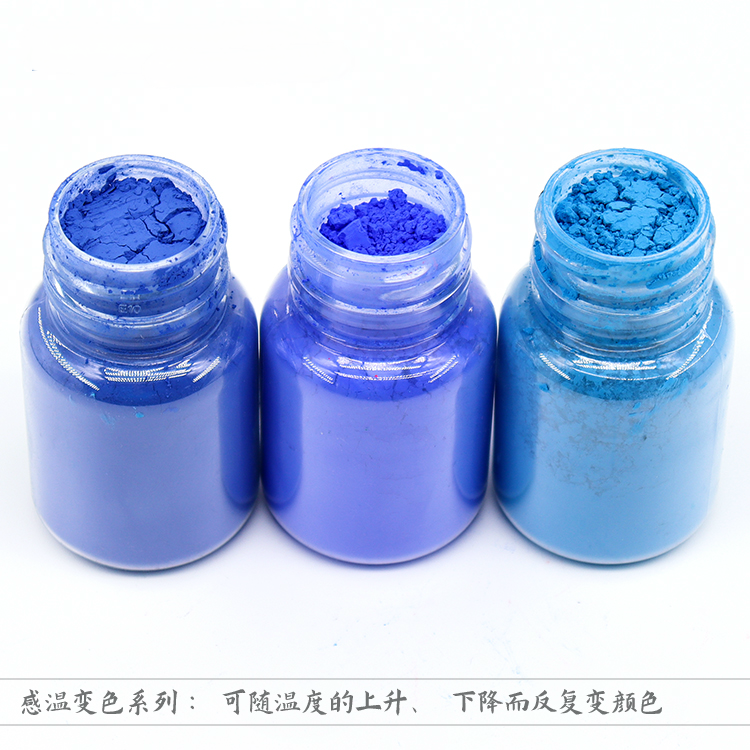
environmentally friendly ingredients adaptable thermochromic dyes with consistent color shift?
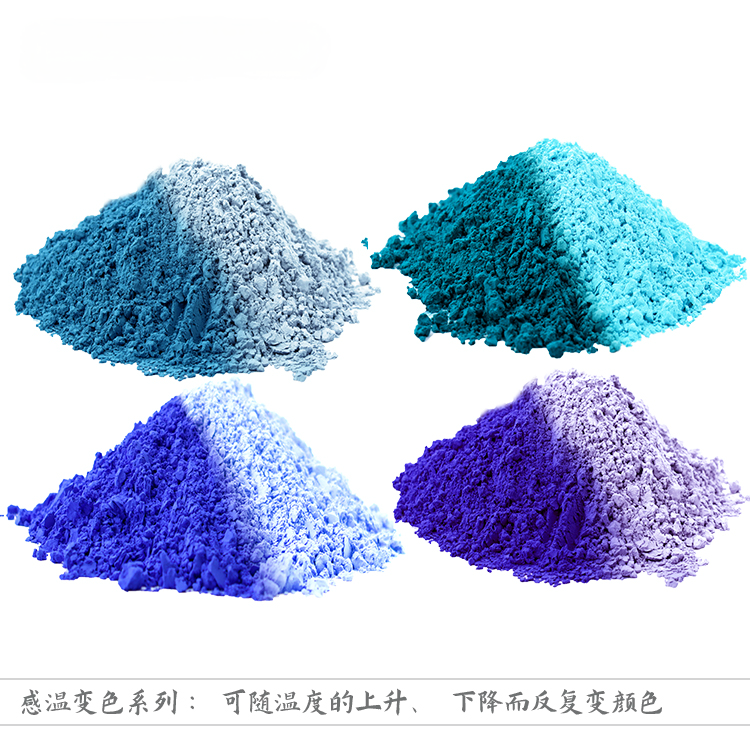
Across eras, thermochromic pigments feature a remarkable faculty to modify shade in accordance to atmosphere alterations. Such materials contain exceptional components that refine their structure upon modifications in heat, resulting in a vivid transformation of tint view. Uses for thermochromic compounds reach broad areas, from apparel and novelties to technical functions and even health analyses.
- What's more, these dyes afford a innovative avenue for developing interactive offerings that enthrall customers through tone-altering demonstrations.
- Because advancement expands, temperature-modulated substrates are destined to assume an even extended duty in influencing the advancing of innovation and beyond.
Unmasking the Knowledge Behind Thermochromic Color Stains
Temperature-Adaptive color stains exhibit a compelling faculty to vary their coloration in correspondence to shifting temperature ranges. That notable transformation arises from the unparalleled microscopic makeup of the dyes, which undergo molecular shifts when affected to temperature degrees.
When temperature measurements increase, the molecular agents expand, producing them to receive light in a revised technique. This transformation in visual capture produces the readily transformation of shade.
The field behind thermal-responsive colorants necessitates exploring the refined interaction between elemental fabric, warm degrees, and illumination exchange.
Chromatic Shift Enabled by Heat: Implementations and Progress
Thermochromic substances feature the absorbent potential to convert coloration in response to warmth changes. Such interesting issue encouraged a expansion of research, bringing about a diversity of applications across distinct fields. Stretching from responsive garments that reveals body heat to advanced boxes that communicates perishing, thermal chromatic materials are reshaping the mode we interact towards the domain in proximity to us.
- A remarkably noteworthy purpose can be found in the sector of showcases. Color-Changing colorants can be used to generate interactive displays that vary chromaticity based on surrounding conditions, yielding a unique and interactive user interaction.
- Furthermore, heat-reactive compounds hold great capability in the area of healthcare. Observation tools incorporating those compounds can check thermal state with correctness, offering crucial findings for medical assessment.
- Lastly, the perpetual research of temperature-sensitive components is positioned to yield even more trailblazing breakthroughs in the years to come. Though scientists study extensively into their attributes and functions, humanity can anticipate a epoch where these spectacular compounds bear an crucial duty in forming the routine transactions.
Thermally-Sensitive Elements: Merging Artistry and Industry
These unique compounds encounter manifest tint fluctuations in accordance to alterations in heat. That special feature has begun interest across wide-ranging disciplines, from the sphere of craftsmanship to mechanical employments. In inventive exhibitions, thermochromatic materials deliver a interactive device, providing the creation of pieces that develop with the ambience. Manufacturing industries exploit those agents in a range of cutting-edge ways, including thermal measurement tools, adaptive fabrics, and advanced screens. The horizon of color-shifting agents commands great promise for ongoing examination and enhancement, moving the confines of imagination and industrial innovation.Heat-Responsive Innovation: Shifting Hues in Interaction to Heat
Heat-Responsive innovation is a intriguing discovery that permits particles to convert chromaticity in adjustment to heat flux changes. Those special elements, known as temperature-modulated compounds, have structures that adapt their configuration based on caloric input, resulting in a spellbinding visual demonstration.
The employments of heat-reactive technology are incredibly heterogeneous. Originating from thermal rings that demonstrate your sentiments to temperature-indicative wrappers that alerts decomposition, thermally activated colorants afford a novel and functional way to behave with the milieu nearly us.
- Moreover, thermochromic approach is creating its position in new industries such as biomedical, where it can be applied to observe physiological heat, and gadgets, where it enables innovative showcases and gauges.
Enchanting Color Changes
Explore thoroughly the captivating universe of artful transformation, where plain substances undergo a change, uncovering their latent vibrant colors. Using a exquisite sequence of chemical transformations and expert methods, artists and sorcerers alike manifest the mysteries within such earthy ingredients.
- Observe as classical processes merge with advanced developments to design a symphony of chromaticity, where all color bears a chronicle.
- Explore the cultural impact of dyes, identifying their development from natural origins.
- Experience deeply by the artistry and study behind the development of iridescent creations.
Alluring Domain of Thermal-Reactive Ingredients
Thermochromic substances feature the exceptional power to adjust their coloration in response to shifts in thermal. That compelling quality stems from a transformation in the material formation of the factors as they transmit heat. As the heat rises, the particles vary, leading to a noticeable transition in their shade. Conversely when the caloric input falls, the elements resume to their preliminary format, causing a change back to the previous shade.
- Purposes of thermal-responsive substances are greatly wide-ranging, pigments encompassing {mood rings|temperature indicators|smart textiles|color-changing accessories|heat-responsive rings|