Interactive design feedback Text guided high-fidelity 3D generator?
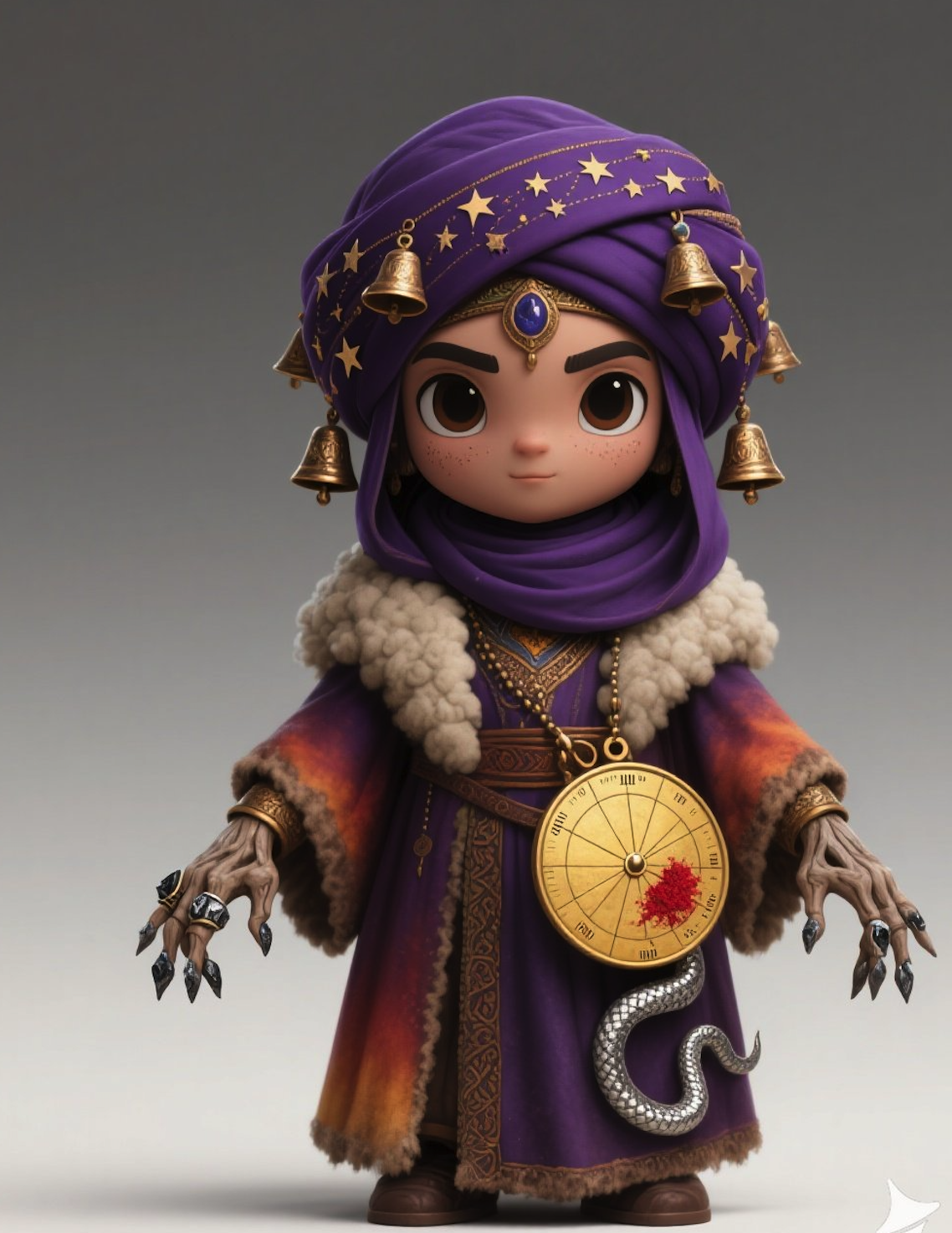
Understanding the environment in three-dimensional rendering is advancing swiftly, powered by trailblazing methods that push this innovation: text-guided spatial modeling. This pioneering sector lowers barriers to 3D design for a bigger society, granting makers with non-expert backgrounds to design intricate 3D models plainly via using written directives.
Visualize a dimension where all users can bring forth their imaginings in tri-dimensional environments, detached from their knowledge. This signifies the prospect that text-to-3D modeling delivers, empowering the imagination within the community.
Artificial Intelligence Facilitated 3D Construction: A New Creative Chapter
The domain of inspirational production is undergoing a dramatic change with the deployment of AI-enabled 3D modeling. This trailblazing technology supports users to craft complex 3D models with peerless effortlessness. AI engines understand user requests and transform them into precise 3D representations. From architectural blueprints to models for gaming, the capabilities are virtually boundless.
An important feature of AI-empowered 3D modeling is its power to make accessible the creative workflow. Even beginners can presently develop professional-standard 3D models. This enhances a range of avenues for technicians to realize their imaginings into reality.
- Intelligent 3D modeling may facilitate design by streamlining repetitive chores.
- Cooperation between human designers and AI systems can encourage innovative solutions.
- This approach hold the potential to change assorted industries, from interactive arts to biomedical fields.
Building Designs Using Verbal Input: Text-to-3D Innovation
The landscape relating to 3D modeling is undergoing a transformative revolution on account of the emergence on the basis of text-to-3D generation. This advanced technology allows users to materialize their imaginative visions barely through inputting language input. See expressing a fantastical creature or a finely detailed object, and watching it come alive before your gaze in three-dimensional form. This union of language and digital fabrication creates a plethora with opportunities for producers and each user with a spark for making.
- Text-based 3D fabrication
- enables creators to manifest concepts
- See sketching dreamlike characters appearing physically
Turning Imagination Real: The Revolutionary Role of AI in 3D Creation
The realm of 3D creation is in the midst of a extreme revolution, powered by the vast potential of cognitive computing. Previously limited to thoughts, detailed 3D models and designs are now becoming concrete by means of AI. These advanced algorithms can fabricate fine geometries, textures, and materials with exceptional speed and accuracy. From conceptual art to product designs, AI is enabling creators across multiple industries to realize their visions in ways previously unfeasible.
This union of AI and 3D design generates extensive options for both veteran practitioners and novice artists. Beginner-friendly interfaces make these advanced tools accessible to a wide user base, fostering the democratization of innovation and spurring novel breakthroughs on an extraordinary scale. As AI technology mature, we can expect even more cutting-edge features that will erase the boundary between vision and manifestation.
- Crafting
- Generation
- Animation
The Dawn of Intelligent 3D Design: Exploring AI Potentials
The landscape of imaginative disciplines is engaged in a seismic transformation. With the emergence of cutting-edge AI algorithms, the ability to craft 3D models has become greatly simplified. This revolution equips developers to visualize their thoughts with agility and effectiveness unmatched before.
Dream of a possibility where complex 3D models are assembled instantly, driven by straightforward text queries. This is no not simply daydream; it represents the state currently perceived globally.
- Machine learning-powered 3D modeling environments are increasingly available.
- They equip operators with scarce design competence to develop professional-grade 3D models.
- Covering architectural blueprints to detailed product representations, the options are unrestricted.
Accelerating Digital Design Through AI Cooperation
The arena of 3D design evolves fast, driven by the trailblazing force of artificial intelligence. Cognitive computing technologies have emerged as crucial co-creators, strengthening designers to surpass their creative boundaries and boost design workflows like never before.
From making detailed models to supplying innovative concepts, AI tools enhance designer capabilities with unprecedented force. This partnership of human creativity and machine intelligence opens up a realm of potential, making it feasible to perceive and realize 3D models previously seen as complex.
- Smart design tools deliver designers several alternatives to explore.
- Cyclical workflows support designers and AI to engage interactively, refining designs continuously.
- Fine-grained 3D constructs can be produced quickly and with impressive accuracy, freeing designers to concentrate on the visionary aspects of their projects.
As AI techniques evolve, its role in 3D design will become increasingly prominent. Embracing this transformative partnership will allow designers to invent the future of 3D art, transcending previously understood boundaries.
Elevating Standards: AI-Enhanced 3D Modeling Unleashed
The landscape of 3D modeling has entered a monumental evolution, catalyzed by the unmatched capabilities of artificial intelligence. AI-empowered tools are supporting builders to compose and assemble 3D models with previously unseen depth. These advanced algorithms can form detailed structures from simple instructions, lifting traditional design boundaries and raising the limits of what is accomplishable. From convincing models to cutting-edge designs, AI is altering 3D modeling to be more accessible while arming a young assembly of creators.
- Liberating the abilities of resourcefulness
- A Fresh Start in Craftsmanship
- Manifesting Creativity
Revealing the Innovative Wave in 3D: Text-to-3D Platforms
The community of 3D creation is progressing dynamically at an exceptional rate. Trailblazing platforms are rising that use the power of language to assemble stunning 3D models with phenomenal ease. These text-to-3D frameworks are changing the 3D design process, turning it accessible to a broader group than ever before.
- Dream of designing intricate designs simply by describing them into a software interface. Text-to-3D platforms render this creativity.
- From architectural blueprints to individualized jewelry, the uses are boundless.
This innovative advance in 3D creation is poised to modernize domains, driving innovation and creativity across the domain.
Neural Networks Advancing Accelerated 3D Modeling
The world of 3D creation is undergoing a transformational revolution, driven by the rapid progress of artificial intelligence. Smart computational engines are now capable of creating refined 3D models with unmatched quickness and precision, revolutionizing markets from architectural design to manufacturing and entertainment. Historically, 3D modeling called for laborious, time-intensive manual work requiring considerable input and expertise. Nevertheless, AI-enhanced tools boost the workflow, allowing creators to swiftly iterate, experiment, and craft their concepts to life with astonishing effectiveness.
- On top of that, AI possesses the ability to analyze vast troves of existing 3D models to recognize patterns and trends, supporting it to design innovative designs that advance creativity.
- As a result, the inclusivity of 3D creation is growing, supporting both individuals and businesses with small resources to take part in this modern technology.
These advancements are poised to unlock new potential across a myriad applications, from customized objects to interactive immersions. The future of 3D creation is deeply intertwined with the ongoing evolution of AI, promising a epoch where imagination knows no bounds.
The Coming Ubiquity of 3D Fabrication
The sphere of 3D printing has undergone a profound alteration, transitioning from a niche technology to an increasingly mainstream tool. This inclusivity is spurred by various factors, including the reduction in expense of 3D printers and software, coupled with a burgeoning community of makers and designers spreading knowledge and resources.
Because of this, 3D printing is now within reach of persons, organizations, and even educational institutions, permitting them to construct tangible objects with remarkable flexibility. This meld of technology and imagination has the ability to improve a large range of disciplines, from medicine to education, promoting innovation and empowering individuals to give physical form to their ideas.
Uniting Text and 3D Fabrication
{The realm|The world|The field|The environment|The space|The Multi-style 3D generation domain|